When you start your car, various symbols may flash on the dashboard, including the anti-lock braking system (ABS). But if you’re reading this, chances are your ABS light didn’t just flash; it’s probably staying illuminated on the dash. This issue could be as simple as debris interfering with a sensor, or as serious as ABS system failure, disabling one of your vehicle’s most important safety features.
This guide explains what the ABS system does, what the warning light means, and how to troubleshoot common problems so you can get back to safer driving sooner.
Key Takeaways
- What is ABS: ABS stands for anti-lock braking system, and helps prevent wheels from locking during hard stops
- Illuminated ABS Dash Light Causes: The ABS warning light illuminates when the system detects a malfunction that can compromise its ability to activate the brakes effectively.
- Common ABS Problems: Faulty wheel speed sensors, a bad ABS module, low brake fluid, or other brake system issues.
- Next Steps: While some ABS troubleshooting can be performed at home, a professional inspection is often required to pinpoint the underlying issue and ensure the system works properly.
What Is the ABS System on a Car?
ABS stands for anti-lock braking system, a safety feature that prevents your wheels from locking up when you hit the brakes hard. When wheels lock, they stop turning and lose traction while the car is still in motion, which can cause dangerous skidding and loss of steering control. Preventing your wheels from locking up is especially important in wet or icy conditions, when traction is already limited.
Anti-lock braking systems use wheel speed sensors to monitor how fast each wheel is turning. If the system senses that one or more wheels are slowing and about to lock, it rapidly pumps the brakes—up to 15 times per second—to adjust hydraulic pressure at the wheels.
The ABS pumps the brakes much faster than humans can, helping drivers react quickly to emergency braking situations while maintaining traction. If you’ve ever had to slam on the brakes to avoid a collision, you may have felt your brake pedal pulsing; that’s your ABS doing its job.
What Does it Mean When the ABS Light Comes On?
When the ABS light comes on, it means the system has detected an issue, and anti-lock braking may be disabled until the problem is fixed and the error code is cleared.
While an anti-lock brake system malfunction isn’t likely to affect your normal braking performance, the ABS may not activate during hard stops or in slippery conditions when you need it most, resulting in reduced steering control and increased stopping distance.
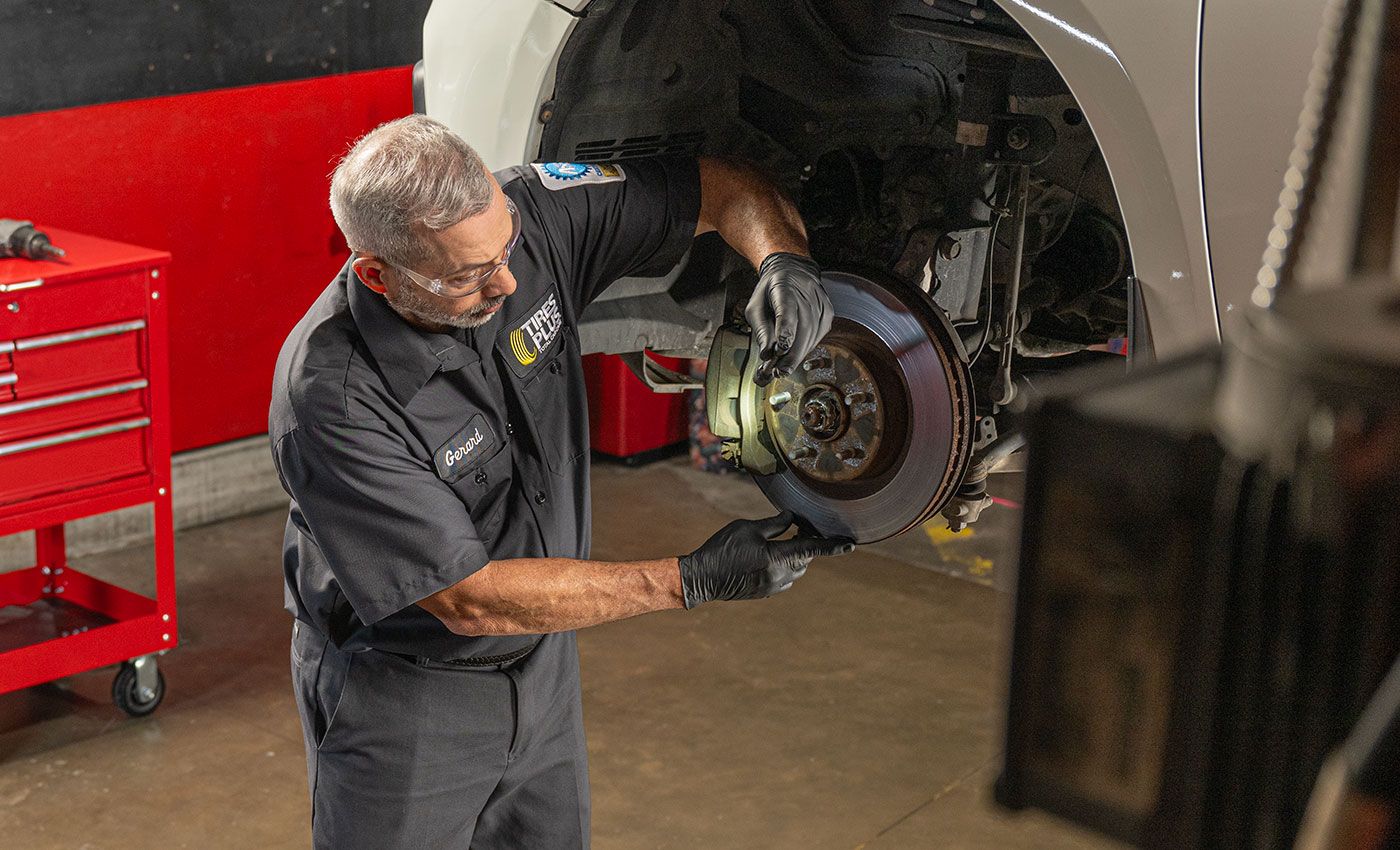
If the light stays on, it’s smart to have it checked. The technicians at Tires Plus can scan for trouble codes, inspect components, and pinpoint the issue. See our current offers for ways to save on your next visit.
Anti-Lock Brake System Troubleshooting: What’s Triggering Your Warning Light?
From dirty speed sensors to more complex brake issues, there are various ABS system problems that can trigger the warning light. While some fixes can be handled at home, most repairs are best left to a professional. Here are some common causes:
Faulty Wheel Speed Sensor
One of the most common reasons for an illuminated ABS warning light is a faulty wheel speed sensor. Speed sensors are usually located on the wheel hub or axle. They track how fast each wheel is spinning relative to the others, and send that data to an ABS control unit.
Because they're near the wheels, speed sensors are regularly exposed to heat, water, road debris, and other elements that can cause damage. A dirty, corroded, or disconnected speed sensor may send erratic signals (or no signal at all), triggering the ABS warning light.
Visually inspect speed sensors and their wiring harnesses for damage. You can also disconnect the connector from the speed sensor and check for corrosion on the terminal. However, the most accurate way to determine if you have a faulty wheel speed sensor is to have a professional technician at Tires Plus use a diagnostic scanner tool to read ABS codes and test the sensors.
Blown ABS Fuse
Like many electrical systems in your vehicle, the anti-lock brake system runs through a fuse. If that fuse blows due to a short circuit or a surge in current, the ABS system may shut off, triggering the warning light. It could also be a sign of underlying electrical issues that should be left to a professional.
Refer to your owner’s manual to locate the ABS fuse in your car’s fuse box and check if the fuse has blown.
Bad ABS Module
The ABS module or control unit processes sensor data and controls brake pressure. Similar to other electrical parts, ABS module failure symptoms—such as a warning light that won’t go away or inconsistent braking response—are often the result of heat, moisture, corrosion, or vibrations that knock components loose.
Bad ABS module symptoms should be checked out by a trained technician with the proper diagnostic tools.
Damaged ABS Tone Ring
Tone rings, also known as reluctor rings, are typically located inside the wheel hub or attached to the axle and spin with the wheel, providing readings to the speed sensor. Over time, rust and cracks can chip away at tone rings and disrupt sensor readings, leading to an erratic signal that may trigger your ABS warning light.
Because accessing a tone ring typically involves taking apart the wheel assembly, and damage can be as subtle as a small chip in the ring’s teeth, checking this component is best left to the pros.
Low Brake Fluid
Since your vehicle’s ABS relies on proper hydraulic pressure in the brake lines, low brake fluid levels can lower braking effectiveness and trigger the ABS warning light. But brake fluid doesn’t just disappear. In many cases, low fluid levels indicate a leak in the system.
Check the brake fluid reservoir under your hood and see if the fluid level is close to or below the minimum line. If brake fluid is low, topping off the reservoir may clear your ABS warning light, but only temporarily. A leak in the system should be repaired by a professional to ensure your regular brakes and anti-lock brakes work properly.
Hydraulic Pump Problem
Your ABS system’s hydraulic pump, also known as the ABS pump, controls brake pressure when the ABS is activated. If the pump breaks down due to brake fluid contamination, electrical failure, or general wear, the ABS system will likely shut off and illuminate the warning light.
The ABS pump is a complex part of your anti-lock braking system and also requires professional diagnostics and repair.
ABS Brake System FAQs
Is it Safe to Drive with the ABS Light On?
Even though your standard brakes will likely still function when ABS is disabled, driving without ABS is less safe, especially in slippery road conditions. If you choose to drive with your ABS light on, practice extra caution and expect longer stopping distances and potential skidding with hard braking.
If your ABS light is on, the pros at Tires Plus can help diagnose the issue and get your vehicle back to a safe-to-drive condition.
Does My Car Have ABS Brakes?
Most likely, yes. All cars made after 2012 are required by law to have an anti-lock braking system, but ABS has been standard on most cars long before then. Look for the ABS warning light to flash on your dashboard when you start your car, or check your owner’s manual to be sure.
How to Tell Which ABS Sensor Is Bad?
The fastest and most accurate way to find a bad ABS sensor, also called a wheel speed sensor, is with an OBD-II scanner or a similar diagnostic scan tool that can read data from the speed sensors. However, not all diagnostic scanners can read ABS codes. Be certain your ABS warning light is diagnosed properly by scheduling an appointment with Tires Plus.
Can a Bad ABS Module Cause Transmission Problems?
Yes, bad ABS modules and faulty wheel speed sensors can affect your transmission. Most transmission control modules (TCMs) rely on ABS speed sensor data to control gear shifting. If your vehicle’s TCM is getting inaccurate speed readings from the ABS system, you may experience hard shifting, jerking, or transmission damage.
Can Low Brake Fluid Cause ABS Light Illumination?
Yes. Low brake fluid levels can reduce hydraulic pressure and trigger the ABS warning light, which often signals a leak in the braking system.
When Is ABS Most Effective?
Your ABS system is most effective when your wheels are at greater risk of locking and sliding, such as hard braking in slippery conditions like rain, snow, or ice, panic braking, or accident avoidance.
Trust Tires Plus to Get Your ABS Back in Shape
If your ABS light has come on—or your brakes feel different than usual—it’s worth getting things checked sooner rather than later. A brake system warning may start small, but it can quickly affect stopping safety.
Tires Plus technicians can perform a full brake inspection and run a diagnostic scan to read stored trouble codes, helping pinpoint whether the alert is tied to a sensor issue, low brake fluid, or another brake-related concern. Don’t take chances with your stopping power. Tires Plus offers free brake inspections with an available coupon. Check our Offers page for more details.